The Plague Exodus

The water isn't drying. It's leaving.

Raised never to owe anyone, a dying village's daughter goes where her brother died going — into the prosperous, guilt-haunted city she was taught to blame — and uncovers an enemy so old both societies have forgotten to fear it, and a chance to make opportunity something that no longer has to run through anyone's hands at all.

Draft 38
Current version
Aug 12, 2026
Last updated
The World

Two societies sharing one dying system.

Only one of them knows it's already failing.

The Shallows

The Shallows

Locked

Where the water is running out — and has been for longer than anyone in charge wants to admit.

Full detail
Members → Representatives → Elders. Informal and trust-based; status is earned through years of reliability, not appointment or birth. A society that has fully internalized the High Springs' own meritocratic myth about itself — becoming a Prospect there is treated as the one legitimate ambition, and those who never try are quietly respected for "knowing their place." One Elder has always said otherwise, and has spent decades being treated as bitter for it.
The High Springs

The High Springs

Locked

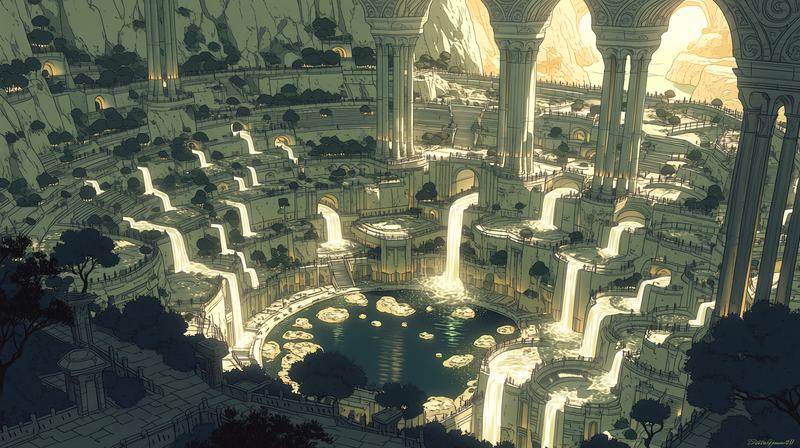
Where the water never stops. Where nobody asks why.

Full detail
Patrons → Sponsors → Prospects. Entry only by sponsorship and vetting — the one sanctioned door in, for those willing to leave everyone else behind to walk through it. Outwardly abundant; the abundance itself is younger, and stranger, than the story everyone tells about it.
The Leeches

The Leeches

Locked

Everyone agrees they're gone. Everyone is wrong.

Full detail
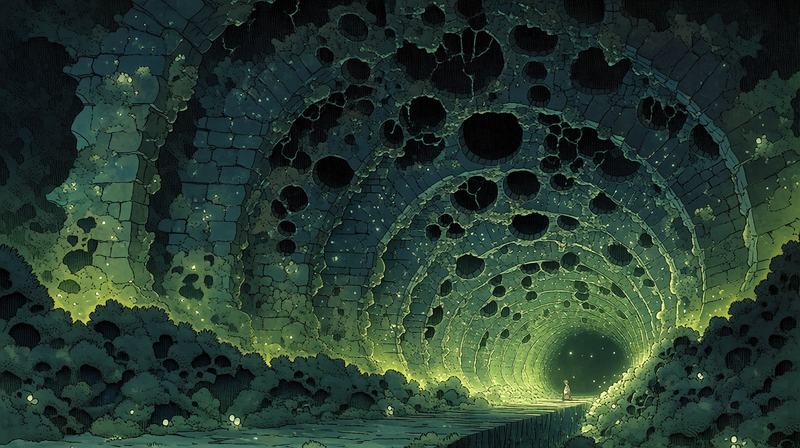
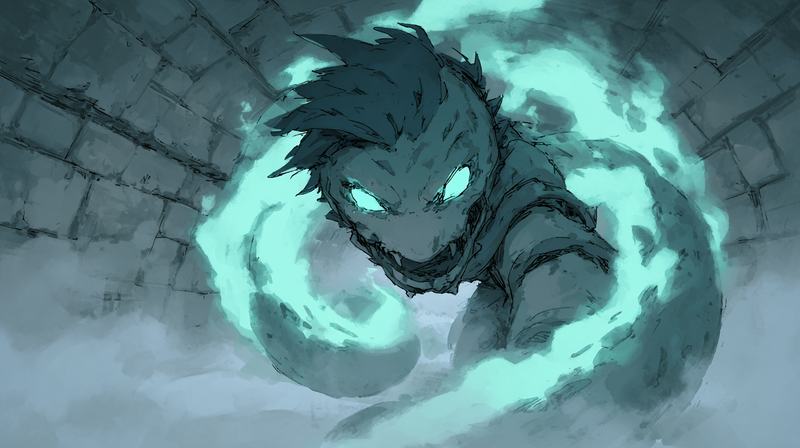
Old enemies of frogs, on both sides of the class divide, since long before there was a divide to be on both sides of. Nobody mourns them. Nobody's looked closely at what "gone" actually means, or at what's still living in the tunnels underneath everything anyone thinks they understand about where their water comes from.
The Story

What they're asking for. What they'll actually find.

This season, the Shallows' water crisis turns acute — not the usual slow hardship, closer to a countdown. The Elders debate an old, nearly-forgotten right to ask the High Springs for help directly — and narrowly fail to authorize it. Lily goes anyway, against her father's wishes and without her community's blessing, with her best friend Fenn at her side and nothing but a race gone wrong behind them.

Getting there is its own story. The Current feeds more than one dying town, and the road to the High Springs runs through the people it's already failed — a settlement with its own version of the same desperate plea, a door in that turns out to be sanctioned for almost no one, and a way through that costs more than either of them understands yet.

What they're told they're asking for is water. What they actually find, once they start pulling at the edges of a system built to look permanent, is older, stranger, and far less finished than either side of the divide has let itself believe.

The High Springs' founders tamed wild floodwaters through ingenuity and discipline, turning chaos into prosperity through earned merit. Generations of patient, disciplined work. That's the story. Everyone agrees on it, including people who weren't alive to remember whether it's true.
It's closer to opportunity than tradition. Someone got there first — read something in the water nobody else was watching for, and moved before anyone could stop him or even understand what he'd seen. Nobody in the High Springs has asked, out loud, what that actually cost. Someone is about to.
One thing worth knowing going in

Not everyone in this story is who the story says they are. That's true at every level — a species, a Patron, a friendship. Decide for yourself who deserves the label once you've seen how it flips.

Characters

Who's carrying the story.

The whole principal cast now has a real want, a real wound, and a specific lie they believe. One seat on the team is still deliberately held open, cast to whoever the story ends up needing rather than decided in advance.

Lily

Lily

Locked as protagonist

Her community couldn't agree to send her. She went anyway, against her father's wishes and without anyone's blessing — carrying a want everyone can see and a need she hasn't found yet: prove her father right, or stop needing him to be.

Fenn

Fenn

Locked
Best Friend

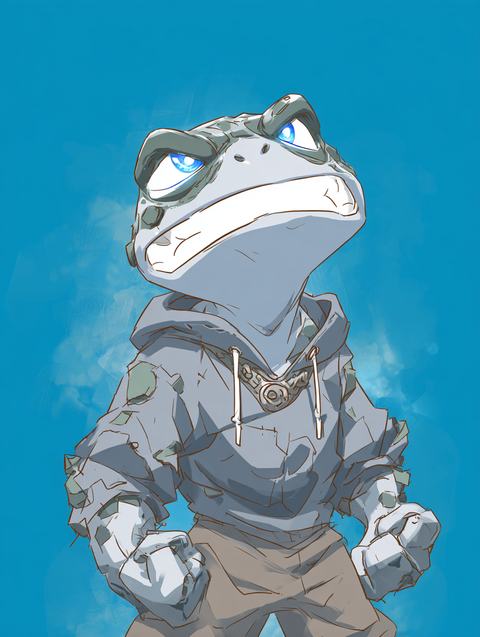
Strongest kid in the Shallows, and everyone including him knows it. Learns fast that strength isn't always enough — and that the people you trust aren't always who you think. Has been the steady thing in her life for years without either of them naming what that costs him.

Vesper

Vesper

Locked
True Believer

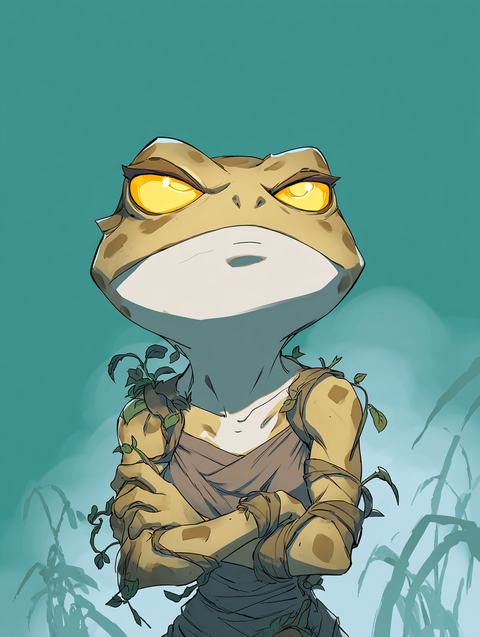
From a second dying town on the same dying river, passed over for its own delegation to the High Springs. Believes in Caldrik in a way neither Lily nor Fenn can afford to anymore — a faith with more riding on it than she lets on. Compulsively useful, funny before she's earnest, and holding a road behind her she'd rather nobody ask about.

The team builds progressively along the journey rather than forming as a pre-assembled delegation — Lily and Fenn alone at first, joined by Vesper at a second town also drying up. Whether a fourth joins once they're inside the High Springs is held open, cast to whoever the story ends up needing.
Halden

Halden

Locked
Lily's Father

Built ten years of standing out of a decision he's never told anyone about. Not composed — visibly diminished, and the whole Shallows has quietly organized around not saying so. Forbidding Lily from the Petition isn't principle. It's the specific terror of a man who already knows exactly how this goes.

Vann

Vann

Locked
The Rising Voice

A Council Representative on the rise, blunt to the point of cruelty and certain that hesitation kills — because it killed his father, once, while the Council deliberated. Drew the exact opposite lesson from Halden's, and neither of them knows they're grieving the same season at each other across the hall.

Caldrik

Caldrik

Not the villain
Patron of High Springs

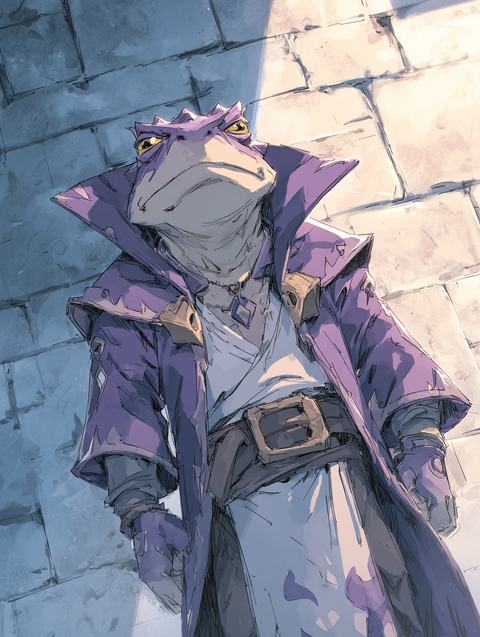
Self-made — built the High Springs from nothing by being the first to read the water right, once. Tyrant in one town's telling, savior in the next, and both are true. Now something's shifting again, and for the first time in his life he can't read it at all. The story's tragic co-lead, not its villain.

Riley

Riley

Open

One of the Incorporated — living and working inside a city that keeps their kind essential and never quite lets them belong. The reason Lily, Fenn, and Vesper get past the Gate that turns them away at all: competent, immediately magnetic, and not nearly as coincidental as it looks. Maybe not entirely what they seem — but then, who in this story is?

Thren, the Last Keeper

Thren

Locked
The Last Keeper

The last holder of an office older than the Elders — the one who reads the water — sitting in every Council and unheeded in all of them. Discredited for being right too early his whole life. Saved someone's life once, unseen, and never stayed long enough to be thanked.

Changelog

How we got here.

Draft 1

Not available — no detail on this draft survives in the current source material.

Draft 2 — "A Humble Frog" (working title)

Retired debt-as-premise. Introduced the core team (Best Friend / True Believer / Skeptic).

Draft 3

Renamed The Center to The High Springs. Introduced the Pact and the Deep Aqueduct & Its Keepers as a hidden layer beneath both surface societies.

Draft 4

First Principles established. Chapter 1 (The Rip) locked. The Enemy reframed from settled legend into something that resurfaces later and changes everything.

Draft 5

Lily's family backstory introduced — a lost brother, a forbidding father. First full World Primer draft. The border incident enters canon.

Draft 6

Retired the Pact entirely — Caldrik reworked as self-made. The Deep Aqueduct's Keepers and the Leeches unified into one species. Team formation became progressive, LOTR-style. Structure & Acts drafted. Riley named.

Draft 7

Home (Shallowmere) established as the pre-split origin. The Rise corrected — Caldrik read the Current's shift, he didn't engineer it. The Incorporated introduced: Leeches living inside High Springs society, and Riley's covert double life among them. Front-end rebuilt as a teaser experience.

Draft 8

The Petition no longer passes — the Elders narrowly fail to authorize it, and Lily goes unauthorized, echoing her brother exactly. The border incident recalibrated: her father was there, Caldrik recognized him as an old friend from Shallowmere and chose the rules over the relationship. Lily's father introduced as a major character — the tragedy that forged his standing, and the rival Elder now eroding it. Open Decisions removed from the front page entirely.

Draft 9

Riley locked as a genuine, unredeemed antagonist rather than a sincere true-believer — the closeness with Lily is real on her end and calculated from the start on Riley's. Lily's father reworked from a quietly eroding Elder into a visibly broken one, undone by an unconfessed decade rather than grief alone. The border incident recast as a dual failure: Caldrik helped too quietly to matter, her father refused what aid there was. Elder Thren expanded into the third member of the original Shallowmere trio and the sole witness to the truth, with a real reason for the Chapter 1 cane-save. The "hidden reservoir" idea retired in favor of Thren's Ledger — a dismissed historical record, not a treasure. Structure & Acts rewritten end to end around the new engine.

Draft 10

The jump from departure to arrival slowed into a real journey. A third settlement, the Weir, introduced downstream on the Current — every town on it turns out to run its own version of the Shallows' Petition. Sorrel joins here, retiring the old "Vesper" placeholder: passed over for the town's own tribute delegation, earned onto the team the hard way, by watching Fenn complete the rescue he couldn't finish in Chapter 1. Riley's introduction moved from a casual friendship inside High Springs to the tunnels themselves — first contact is a rescue, not an introduction, which makes the manipulation colder, not warmer. Gate Humiliation added as its own beat: no Sponsor, no standing, turned away outright. The Treatment / Sequence Outline, previously a stub, is now a full scene-by-scene beat sheet across all three acts.

Draft 11

Resequenced the road: Gate Humiliation now happens at the city, not before it, and two separate tunnel systems replace the one — an accidental fall on the road well before the Gate, unsettling and unresolved, and a second, deliberate crossing near High Springs itself where Riley's introduction becomes a paid offer of passage rather than a rescue out of nowhere. The Weir side quest sharpened into Fenn's showcase specifically — Lily reads the structure, he and a local do the physical work — with a brief, left-behind flirtation that gives Lily her first unconscious, self-denied reaction to Fenn, years before Riley ever enters the story.

Draft 12

Consolidated "Sorrel" into Vesper — same person, same backstory, no longer a new name standing in for an old placeholder. The team stays at the two names already on the page: Vesper, met at the Weir, and Quill, still open, still joining later inside High Springs.

Draft 13

Named Lily's father — Aldric, echoing Caldrik's own hometown naming convention — and gave him a full want/need/gets. The rival Elder is now Vann: not a villain, a man who lost a parent to Council delay years ago and drew the opposite lesson from Aldric's. Elder Thren corrected — not an outcast who appears, a fixture the Council has quietly agreed not to look at, present at every session including the one that matters most. Introduced the High Springs Brokers: unconfirmed rumor, downstream settlements offered exploitative deals in the shape of a lifeline — the legend of the High Springs getting a harder edge from people who've never actually been there.

Draft 14

Aldric renamed Halden — too close to Caldrik on the page, easy to lose track of who's who. The border incident, ten years ago, fully locked down: Lily's brother named — Oren, seventeen, went by choice — and the crisis traced to a real precedent, a ground collapse that year with the same shape as Chapter 1's, which Thren also flagged and was also ignored about. Caldrik's aid specified as his own personal healer sent secretly, with a marked token proving it was real; Halden's refusal specified as conscious, not confused — he knew exactly whose mark it was. Halden and Vann both got their first character art.

Draft 15

Act I locked through the Gate, and chapters 2–9 drafted. Halden reframed — fear, not decline — and put on the page before the politics: Chapter 2 is his, rules instead of relief. The emergency Council now produces real outcomes: local measures under Vann, a stated clock of weeks, and a Petition that dies because its own author refuses its only volunteer. Lily rebalanced from rescued to rescuer — she plays off the cane-save (the house that doesn't say thank you), saves Fenn at the tunnel opening and descends by choice, and leaves home carrying Thren's evidence that the water isn't drying — it's leaving. A four-rung clue ladder now runs from the failed wall to the city gates.

Draft 16

The border incident rebuilt from account into mechanism. The crush now runs on hope — the crowd surges at a guard line it misreads as the gate opening — while Halden stands at the front, talking. Caldrik's aid made concrete: his own healer, that night, in time, carrying a sealed pass that would have opened the infirmary gate after dark — help in the only form that could be refused. And it was, in two voices: Halden's, on principle, reading secret help as shame and hush — and Oren's own "I'm fine," the house rule practiced perfectly on the one night it mattered. Thren's failed chase after the healer added; the pass he pulled from the mud is now the locked keepsake-object of the Act II frame-up. Halden's telling never lies — it just ends at sundown.

Draft 17

The border refusal moved into the open, and made faster and crueler. No healer sent after them — instead the wall's own defense (a relief sluice fired into the crush, water spent as a weapon on the people begging for it), the crowd scattering, and Caldrik walking out the small door to apologize in person. He offers the infirmary; Halden refuses over Oren's own "I mean — it does kinda hurt, Dad." Supplies and a sealed pass refused on the road an hour later; the next morning Oren doesn't wake up. Everyone who stayed at that gate witnessed it — the secret is communal now, kept from the children for ten years. Halden and Caldrik locked as brothers in everything but blood: the split rebuilt as two refusals, fifteen years of starving contact after it, Oren old enough to remember his almost-uncle. Lily never knew him at all.

Draft 18

Thren rebuilt as the story's fourth lead. Locked: half a generation older, the channel-keeper who trained Caldrik and Halden both — one inherited his eyes, the other his convictions, neither kept both — and Oren was his second student, the third mourner nobody counts. The "crank" recalibrated: not awkward, priced out — right on infrastructure time, indistinguishable from wrong on human time — and his anonymous help (the cane, the marks, the kept pass) locked as the story's counter-grammar: help with the toll removed, the thesis practiced small. His betrayal named: not the refusal at the gate, but Halden's ten years of needing him to stay unbelievable. Full want/need/gets added; the sounding-line locked as succession.

Draft 19

Structural cleanup: the whole document re-tiered into LOCKED, VISION, and CONSIDERING. Act 1 (through the Gate) plus backstory stays locked; a new Long-Term Vision section holds the direction — the Caldrik misdirect, the Leech reveal, the convergence — without scene-locking any of it; and everything beyond the Gate that had quietly hardened into false canon (Riley's full arc, Quill, the frame-up, Act 2/3 beat lists) moved to a Considering section to pull from later. Stale tensions surfaced and parked: the recognition problem the brothers-canon created, the fate of the Weir's delegation, and a Vann line that no longer matches Chapter 3.

Draft 20

The misdirect got its angle: exclusivity. Caldrik divisive rather than hated — the Gate and his research arm's dams as the visible harm, the Petition and the Incorporated as the visible mercy, both readings accurate. The Petition locked as his own founding grant, one institution seen from many distances. New irony engine: the siphon forces the yearly tightening that manufactures his villainy — he's been trying to get to yes for twenty-five years. The border now discloses in four retellings, each true from where it stands. And Vann corrected to very vocal: the cruel line lands in Chapter 3 on the record — "grief that size is not a policy" — crueler than he knows, kinder than the truth. Thren is the silent one.

Draft 21

Logline corrected to match canon — the old one still claimed a "rightful petition," which Draft 15 killed, and its first replacement led with rejection, which is Lily's situation but not her issue. Locked: "Raised never to owe anyone, a dying village's daughter goes where her brother died going — into the prosperous, guilt-haunted city she was taught to blame — and uncovers an enemy so old both societies have forgotten to fear it, and a chance to make opportunity something that no longer has to run through anyone's hands at all."

Draft 22

The full Act 1 audit. Six inconsistencies flushed: the Theme section no longer blames Caldrik's hands for the current crisis (the siphon does it, per the irony engine); the cycle theory got its owner (Thren read the shift too and counseled outlasting it — three men, three positions at the split); Vann's vague "earlier crisis" consolidated into the border year, so both Elders grieve the same season at each other. Every lead now has a complete want/need/gets — Fenn and Vesper had none, Caldrik and Lily were missing pieces — plus locked ages. Two tensions closed into the chapters: the Weir's delegation arrives at the Gate queue in Chapter 9, and the border legend gets told at the Weir's own table in Chapter 7 with Lily silent inside it — her fourth silence, and rung two of the retellings. Vesper's relative finally gets used: the Gate returns an answer-shaped nothing.

Draft 23

The story found its heart. Fenn deepened past the Rip: nine years old when Oren died, he quietly assigned himself the vacancy — ten years auditioning to be the older brother she lost, for a girl who has never once seen him that way. Even the strength is built, not born — ten years of making a body for the job, which is why the Rip cuts to the bone. His need: realize he never will be Oren, and that it's okay, because the role was never open. Elevated to a locked second spine in Theme — possibly the story people remember, detonating in reverse through the Riley burn. Vesper's deepening drafted in Considering, deliberately unrushed: the never-belonging engine, the family the Gate split (sponsorship takes families one at a time), possible smuggler years, and the guide the trio will need. Front page teaser replaced — the old hook still promised a delegation that no longer exists; the headline is now Thren's sentence.

Draft 24

The engagement pass — same audit rigor as Draft 22, aimed at the reader's heart instead of the plot's joints. Chapter 1 gets a joy baseline (trash talk and a decade-long tally score) and Lily's gift acting in the action: she alone half-feels the wall going — a hidden rung zero of the clue ladder. The clock becomes an object: Halden's nightly measure-line on the house barrel, jugs kept at feet in the Council hall. Fenn's devotion staged, not stated — he answers her knock with his pack already on, packed since the night the vote failed. Lily's palm on Oren's unopened door on the way out. Vesper made lovable in one beat: compulsively useful, warmth that is also armor. And a new locked texture underneath it all: the Shallows writes on wood — play, fear, memory.

Draft 25

Three thematic laws locked, naming mechanisms the story already ran but never stated as rules: the Shut Door Law (nothing here dies of scarcity — it dies of a hand that could open and didn't, founded in Oren's death at the border gate), the Proxy Romance Law (a romance standing in for a different hunger charges its bill to whoever it stood in for, not the lovers — Riley's mechanism, and the reason Riley gets no redemption where every other antagonist gets some), and the Performance Law (a role performed for love collects nothing until the performance stops, run across Fenn, Vesper, and Vann as one argument told three ways). Cross-referenced into the Border account and all three characters' entries.

Draft 26

Two passes. First, an outside read of Act 1 for voice and texture: a new Voice & Craft Notes section with a sentence-level voice guide for the full cast, a world-texture bank, Vesper locked as the act's comic relief with her Chapter 6 entrance recalibrated to land funny first, and a fix for a few spots where the treatment explained a scene's subtext instead of trusting the image to carry it. Second, a real story-logic pass on Chapter 3: "the only volunteer is Lily" is gone. The Petition now passes on its own merits — the room isn't short on people willing to go, it's short on sponsors, since a nominee needs a sitting Elder's backing to be seated. Half a dozen names come forward, Lily's included, and Halden — the Petition's own author — is the one who won't sponsor her, on the record, no reason required. A new section, The Shallows, In Full, backs all of it: who stayed and why, how Council and the emergency form actually work, what rationing and shoring crews and catch-basins mean mechanically, and where the Shallows sits on the Current relative to the Weir and the Gate.

Draft 27

Two fixes to Draft 26's own Chapter 3, on the question of whether Lily would really just accept being blocked. First, a locked trait: Lily isn't deferential and isn't reckless — she pushes a rule exactly the way she reads a wall, testing for give, and doesn't go through it until the proper way is provably closed, not just unfair. Chapter 3 now shows that on the page: refused by her father, she turns to the rest of the hall and asks whether any other Elder will sponsor her instead — custom doesn't require it to be him — and gets silence, which is the real refusal, not his. Second, Chapter 12's "Lily finds her town's delegation in the queue" beat is gone — she looks for them and doesn't find them, a loose thread Act 1 doesn't pull. What actually happened to them is held in Considering: not a kidnapping, something closer to home and worse.

Draft 28

An independent adversarial audit of the whole of Act 1 — not a self-review, a fresh read hunting for exactly the kind of contrivance Draft 27 fixed twice. Verdict: the character logic holds end to end, cross-referenced and mutually reinforcing across every section, no major action in the 13 chapters that doesn't trace to an established trait. Two real continuity contradictions did turn up, both mechanical, both fixed here: the emergency form's calling rule said "any two Elders jointly" while every chapter has Halden calling it alone, now reconciled to a single Elder; and Act 1 Structure said the act ends on arrival in High Springs while the Treatment and the chapters themselves end it at Chapter 13's handshake with Riley, now consistent. Also closed: why nobody at the Weir mentions the sanctioned delegation passing through (they took the direct road; Lily didn't), and a stray "the Elders authorize" in the Premise tightened to "the Council," since sponsorship alone is Elder-only, not the vote itself.

Draft 29

Chapter 3 restaged, and a real retcon underneath it. "The room answers with silence" wasn't a dramatized beat, it was a passive non-event — replaced with Lily on her feet, declaring in front of the whole hall that she's going anyway, sponsored or not. What actually stops her isn't the room: Halden pulls her aside and breaks the household's ten-year silence, saying Oren's name out loud on purpose for the first time since the funeral, and she stands down publicly, at real cost, in front of everyone who just watched her swear the opposite. And underneath that: Oren's crossing was never an unsanctioned breakaway. The Council waved it through in a single panicked sitting ten years ago — official, just rushed — while the same session's slower deliberation over relief at home never caught up in time for Vann's parent. Halden's Petition doctrine isn't "ask instead of not asking," it's the formalized, unhurried version of a yes his town once gave too fast — the same doctrine now costing his own daughter her seat. Lily's departure stops echoing her brother's choice and inverts it: he went with his father, official and sanctioned, and it wasn't enough. She goes alone, breaking in secret the exact promise she made in public three days before.

Draft 30

A pressure-test pass on the first three chapters, the same skeptical read that caught Chapter 3's earlier problems, now aimed at what Draft 29 just built. Closed the one gap that could have actually broken the retcon: if Halden's own Petition doctrine already fixed the haste that killed Oren, why is he still this afraid of a properly-sponsored delegate? Answer, now on the page — it was never the process he distrusted; he knows exactly how careful the system he built is. It's that Oren went through a door just as carefully guarded once and didn't come home, and no amount of sponsorship has ever made that math feel survivable again. Also fixed: Halden now calls an actual recess before pulling Lily aside, instead of just stepping out of a live session unexplained, and Vann gets a beat in her stand-down instead of vanishing from his own scene — he starts to argue her out of it, and she stops him with a look, which costs the one man in the hall who says everything out loud something too.

Draft 38 — current

The fifth consistency pass — first one to hunt bugs the restructure itself could have made, and it found them: four law-pointers still aimed at Theme & Thesis after the laws moved to their own section, all rerouted. The Knowledge Map earned its keep on its first day by surfacing a real gap nobody had asked: what has Vesper actually been told about the mission? Now locked — she believes the trio simply seeks a hearing about the water; not the leaving-thesis, not the brother — which makes her the member of the team who knows least about her own journey, the never-belonging engine running inside the trio itself, and a held Act 2 charge for when she finds out. Also: "the Theft" finally defined in the glossary (naming it is an Act 3 event), the accidental Vesper road-name lock flagged for veto, and Riley's Considering entry split back into readable paragraphs.

Draft 37

The architecture restructure: nineteen sections in gaining-knowledge order — what the story argues, the rules it's tested against, the facts nothing may contradict, the people, the story, and only then, quarantined behind a not-canon banner, where the authors are leaning. Four new instruments: a Status page with the contribution contract and the load-bearing locks at a glance; a locked Timeline (year-zero axis plus the Act 1 day-by-day); a Glossary of water, civic, and naming conventions; and the Knowledge Map — who knows, suspects, wrongly believes, or is ignorant of every secret in the story, seventeen rows by ten minds plus the reader, because every consistency bug ever found here was a who-knows-what bug. The Laws are consolidated into one section; every chapter now carries a metadata block (POV, engines, ledger gap, closing image). No content changed, no new locks — order, labeling, and instruments only.

Draft 36

The Reader's Track arrives: a new manuscript section telling the same thirteen chapters for potential readers — a season blurb and chapter-about descriptions in the register of a series you binge, built under a locked rule: a blurb may state a chapter's situation and its question, never its answer. First artifact of the spoiler-free track the collaboration architecture calls for; the architect track (spoilers, mechanisms, why we're doing things) remains the bible itself. The two-track design is now specced — architect keys and reader keys will scope what an outside collaborator's AI gets to see.

Draft 35

Two craft laws promoted from review-notes to the bible itself. The three engines: Act 1 runs on the clock (weeks, half-rations, the heavier road home), the ladder (rung zero to the eyes and the work-sound), and the wound (four silences, two quiet houses, a book of rations that means I love you) — and no scene may let all three idle at once. And the reader's ledger: every chapter ends with the reader owning something a character doesn't — the help unnamed, the pity unspoken, the "no" nobody believes, the smile. Audited across all thirteen locked chapters, the streak holds; treat it as law until a chapter argues for its life. Both are now written into Structure and First Principles as tests for everything Act 2 will add.

Draft 34

The Act 1 consistency pass, closing the seams two heavy rounds opened. The big one is a hole turned into the act's sharpest new beat: the delegation now has a stated shape — Halden's own doctrine sets it at three, two to speak and a reader of water so the town's case arrives as evidence — and Lily stands for the seat written around her. Her father unfills his own doctrine's seat in front of the whole hall, and the only other frog alive who could take it sits in the Keeper's seat, unasked, unspeaking. The delegation leaves two where the rules call for three. Also fixed: Chapter 13's watcher is no longer recognizably Incorporated (three Shallows kids have never seen a Leech — Act 2 keeps its jolt), the four living witnesses are named at last (Halden, Thren, and two gray channel-men), Vesper's faith is reconciled with her road years — the belief is the story she built to climb out of them — and the Premise no longer says Thren points her at the Weir, because she reads it off his marks herself.

Draft 33

Two Draft 32 calls reworked into stronger shapes. Iris never left: she keeps her own house three streets away — never estranged from Lily, still loyal to Halden's whole doctrine, unable to share a roof with the question she could never ask. The family talks through the house-book, a stitched ledger of rations and mending that travels between the two houses — love in inventory form, Oren's last entry somewhere in its early pages. Lily's night after the Council now ends at her mother's; her goodbye is the book left on the step with one line that almost isn't logistics: don't hold my portion. The morning-after cutaway is three doors — Iris at Halden's threshold with the book, Halden's fist lowered at Thren's, the barrel line for one fewer. And Riley's con is now con-as-rescue: Chapter 13 belongs to Vesper — her smuggler years locked and confessed, her contact Sedge selling passage for everything left in the packs — while Riley sits unnamed in the corner of the shadow-market, and the act ends on that figure's smile. The crossing's betrayal is scripted, the rescue staged, and the debt waived on purpose: you owe me nothing, said to the girl raised to die before owing. Manufacture the danger, sell the deliverance — Riley runs on three people in a tunnel exactly what High Springs runs on the Current.

Draft 32

The full accountability pass, and the biggest single round since the retcon. Thren is remade as the Last Keeper — holder of an office older than the Elders, seated with voice and vote at every session, unvoted in ten years by his own choice: his last vote was the lone no against the crossing that killed the boy he loved, and the room reads a decade of silence as the crank gone quiet when it's actually a measurement. Sponsorship is gone — the delegation seats volunteers, Vann's own crew-captains, and Halden loses every argument of the night except the one against his daughter's name, which the hall grants him out of pity, the only currency he has left. Lily's mother exists now: Iris, alive, downstream, driven out by the same silence that killed her son — her letters arrive every season and sit opened and unanswered in the drawer under the barrel. Halden is a failed inventor whose best machine finally works in Act 3, when the water is nobody's. Geography is locked (three days to the Weir, four more to the Gate; Oren walked four days home before the night that took him). Riley gets an engine — a believer in the underground's catechism, offered the open door in Act III and shown refusing it — and has no sex, a species fact, not a mystery. The sluice fires cold as well as force. The causal chain is stated once: dams to scattering to siphon to collapse to crossing to crush to refusal to Oren — Lily is accidentally right about Caldrik, two links further up than she can imagine. Vann darkens: he comes around, not fully, and ends the story holding the town. Vesper does voices. The fifteen-year table math is now ten. The Character Vault is synced to all of it.

Draft 31

Chapter 1's disaster was never a wall failing — it's the ground itself giving way, and it should have been this from the start: the border-year precedent already said "the ground gave first," but Chapter 1's actual prose and the infrastructure glossary both still described a wall collapse. Fixed at the source. The Rip doesn't lose a wall, it loses a third of itself into a hole that opens mid-race — the second time in ten years the Shallows has felt the ground do this, with everyone old enough to remember the first time already knowing what a third means: not a channel lost, a town. New distinction in the infrastructure glossary between ordinary wall wear (visible coming, shoreable) and ground giving (no warning, nothing to shore against, the actually dire thing) — which also gives Vann's shoring work a harder edge: he knows it can't touch the thing that actually took the Rip, and does it anyway because it's the only lever he has. Chapter 4 keeps its title and location — Thren still shows her evidence "at the wall" — but it's now explicit that the wall is a casualty at the breach's edge, undermined and taken down by the ground giving beneath it, not the cause.